Buy lopezrubiolab.eu ?
We are moving the project
lopezrubiolab.eu .
Are you interested in purchasing the domain
lopezrubiolab.eu ?
domain@kv-gmbh.de · 0541-91531010
Buy lopezrubiolab.eu ?
Is it "analog dem" or "analog zu dem"?
The correct phrase is "analog zu dem." "Analog zu dem" translates to "analogous to that" in English and is used to compare or draw similarities between two things. On the other hand, "analog dem" does not make grammatical sense in German. **
Does it say "auf dem Markt" or "an dem Markt"?
The correct phrase is "auf dem Markt." This is because "auf" is used to indicate location on a surface, and "Markt" is a location that can be considered a surface. Therefore, the preposition "auf" is used to show that something is located on the market. **


Similar search terms for Dem
Top-Angebote
Products related to Dem:
-
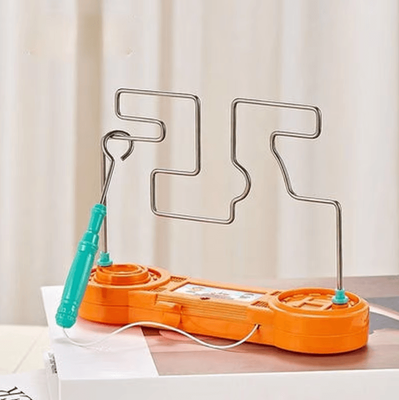
Uplift Curations Electric Shock Toy For Kids Educational Touch Maze Game & Science Experiment Gift orangeTurn playtime into a fun learning adventure with this electric shock toy designed to entertain and educate. Whether at a birthday party or in the classroom, this kids science game offers a handson way for children to explore circuits and steadyhand...62,50 $*Shipping: 0,00 $Secure redirect to the provider
-
CGP Books GCSE Combined Science: Biology AQA Revision Question Cards: superb for the 2024 and 2025 exams (CGP AQA GCSE Combined Science)It’s all very well reading through your study notes, but how much can you actually remember? Put your GCSE Biology knowledge to the test with CGP’s brilliant Revision Question Cards! There are 63 cards in the pack, covering all the key Biology topics from the Grade 9-1 AQA (Trilogy Specification) Combined Science course. Each one starts off with quick questions to warm you up, followed by harder questions to get your brain into top gear. Flip the card over and you’ll find full answers to each question, carefully written to help you understand everything you need to know. Along the way, we’ve packed in plenty of diagrams and expert revision tips, and there are even questions on Working Scientifically and Practical Skills. Amazing!6,95 £*Shipping: 2,99 £Secure redirect to the provider
-
CGP Books GCSE AQA Combined Science Revision Question Cards 3 Pack Set (Chemistry, Physics, Biology)To cut to the chase, there’s more to revision than just reading through study notes. If you really want to make sure you know GCSE Chemistry, Physics and Biology you’ll need to test yourself - and that’s where these CGP Revision Question Cards come in! There are 95 cards in the pack, covering every key Grade 9-1 AQA topic. Each one starts off with quick questions to warm you up, followed by harder questions to get your brain into top gear. Flip the card over and you’ll find full answers to each question, carefully written to help you understand everything you need to know. Along the way, we’ve packed in plenty of diagrams and expert revision tips, and there are even questions on Working Scientifically and Practical Skills. Amazing!21,99 £*Shipping: 2,99 £Secure redirect to the provider
-
Uplift Picks Magic Crystal Growing Christmas Tree Science Experiment Toy For Kids white Snowman 15 CmTurn curiosity into wonder with a fun activity that feels like magic. This hands on science toy lets children watch crystals grow and bloom on a paper tree, creating a colorful and exciting transformation. Easy to set up and fascinating to observe,...54,98 $*Shipping: 0,00 $Secure redirect to the provider


-
Why do we write "dem deutschen Volke" and not "dem deutschen Volk"?
The phrase "dem deutschen Volke" is written in the dative case, which is used to indicate the indirect object of a sentence. In this case, "Volke" is the dative form of the noun "Volk." The phrase is commonly seen on the Reichstag building in Berlin as a dedication to the German people. Using the dative case in this context emphasizes the idea of serving or belonging to the German people as a collective entity. **
-
What is correct: "wegen dem neuem Angebot für" or "wegen dem neuen Angebot für"?
The correct form is "wegen dem neuen Angebot für." In this case, "neuen" is the correct form of the adjective to match the masculine dative case of "dem." Therefore, the correct phrase is "wegen dem neuen Angebot für." **
-
Comma after 'in dem' or 'indem'?
In German, the word "indem" is a subordinating conjunction that introduces a dependent clause. When "indem" is used to mean "while" or "by," it is followed by a comma. For example, "Er lernt, indem er liest" (He learns by reading). However, when "indem" is used to mean "in that" or "because," it is not followed by a comma. For example, "Er ist erfolgreich, indem er hart arbeitet" (He is successful because he works hard). **
-
What does "ab dem 25." mean?
"Ab dem 25." means "from the 25th" in German. It indicates that something will start or be valid from the 25th of a certain month or year. For example, "ab dem 25. Mai" would mean "from the 25th of May." **


'Den or dem? Wen or wem?'
In German, "den" and "wen" are used as the accusative forms of the masculine and neuter definite articles, as well as for masculine and neuter direct objects. On the other hand, "dem" and "wem" are used as the dative forms of the masculine and neuter definite articles, as well as for masculine and neuter indirect objects. It's important to pay attention to the case and gender of the noun in order to use the correct form. **
Do you say "Ich bin vor dem Spiegel gestanden" or "Ich habe vor dem Spiegel gestanden"?
Both "Ich bin vor dem Spiegel gestanden" and "Ich habe vor dem Spiegel gestanden" are correct, but they have slightly different meanings. "Ich bin vor dem Spiegel gestanden" implies that you were standing in front of the mirror for a period of time, while "Ich habe vor dem Spiegel gestanden" simply states that you stood in front of the mirror at some point in the past. The choice between the two depends on the specific context and the emphasis you want to convey. **
Top-Angebote
Products related to Dem:
-
Uplift Curations Electric Shock Toy For Kids Educational Touch Maze Game & Science Experiment Gift orangeTurn playtime into a fun learning adventure with this electric shock toy designed to entertain and educate. Whether at a birthday party or in the classroom, this kids science game offers a handson way for children to explore circuits and steadyhand...62,50 $*Shipping: 0,00 $Secure redirect to the provider
-
CGP Books GCSE Combined Science: Biology AQA Revision Question Cards: superb for the 2024 and 2025 exams (CGP AQA GCSE Combined Science)It’s all very well reading through your study notes, but how much can you actually remember? Put your GCSE Biology knowledge to the test with CGP’s brilliant Revision Question Cards! There are 63 cards in the pack, covering all the key Biology topics from the Grade 9-1 AQA (Trilogy Specification) Combined Science course. Each one starts off with quick questions to warm you up, followed by harder questions to get your brain into top gear. Flip the card over and you’ll find full answers to each question, carefully written to help you understand everything you need to know. Along the way, we’ve packed in plenty of diagrams and expert revision tips, and there are even questions on Working Scientifically and Practical Skills. Amazing!6,95 £*Shipping: 2,99 £Secure redirect to the provider
-
Is it "analog dem" or "analog zu dem"?
The correct phrase is "analog zu dem." "Analog zu dem" translates to "analogous to that" in English and is used to compare or draw similarities between two things. On the other hand, "analog dem" does not make grammatical sense in German. **
-
Does it say "auf dem Markt" or "an dem Markt"?
The correct phrase is "auf dem Markt." This is because "auf" is used to indicate location on a surface, and "Markt" is a location that can be considered a surface. Therefore, the preposition "auf" is used to show that something is located on the market. **
-
Why do we write "dem deutschen Volke" and not "dem deutschen Volk"?
The phrase "dem deutschen Volke" is written in the dative case, which is used to indicate the indirect object of a sentence. In this case, "Volke" is the dative form of the noun "Volk." The phrase is commonly seen on the Reichstag building in Berlin as a dedication to the German people. Using the dative case in this context emphasizes the idea of serving or belonging to the German people as a collective entity. **
-
What is correct: "wegen dem neuem Angebot für" or "wegen dem neuen Angebot für"?
The correct form is "wegen dem neuen Angebot für." In this case, "neuen" is the correct form of the adjective to match the masculine dative case of "dem." Therefore, the correct phrase is "wegen dem neuen Angebot für." **
Similar search terms for Dem
-
CGP Books GCSE AQA Combined Science Revision Question Cards 3 Pack Set (Chemistry, Physics, Biology)To cut to the chase, there’s more to revision than just reading through study notes. If you really want to make sure you know GCSE Chemistry, Physics and Biology you’ll need to test yourself - and that’s where these CGP Revision Question Cards come in! There are 95 cards in the pack, covering every key Grade 9-1 AQA topic. Each one starts off with quick questions to warm you up, followed by harder questions to get your brain into top gear. Flip the card over and you’ll find full answers to each question, carefully written to help you understand everything you need to know. Along the way, we’ve packed in plenty of diagrams and expert revision tips, and there are even questions on Working Scientifically and Practical Skills. Amazing!21,99 £*Shipping: 2,99 £Secure redirect to the provider
-
Uplift Picks Magic Crystal Growing Christmas Tree Science Experiment Toy For Kids white Snowman 15 CmTurn curiosity into wonder with a fun activity that feels like magic. This hands on science toy lets children watch crystals grow and bloom on a paper tree, creating a colorful and exciting transformation. Easy to set up and fascinating to observe,...54,98 $*Shipping: 0,00 $Secure redirect to the provider
-
Uplifted Finds Kids Collision Electric Shock Toy Education Electric Touch Maze Game Party Funny Science Experiment Toy orangeBring excitement and learning together with this electric touch maze game for kids. Designed to develop hand eye coordination, focus, and problem solving, this fun science toy challenges children to guide the wand through the maze without touching...42,97 $*Shipping: 0,00 $Secure redirect to the provider
-
Research-powered Eye Duo - Skincare Kit Charlotte Tilbury 3265 Charlotte's Research-powered Eye Duo Size:Darlings, unlock the secret to eyes that appear brighter, depuffed, smoother and younger with my Research-Powered Eye Duo! This CharlotteTilbury.com EXCLUSIVE skincare duo includes:94,05 £*Shipping: 0,00 £Secure redirect to the provider
-
Comma after 'in dem' or 'indem'?
In German, the word "indem" is a subordinating conjunction that introduces a dependent clause. When "indem" is used to mean "while" or "by," it is followed by a comma. For example, "Er lernt, indem er liest" (He learns by reading). However, when "indem" is used to mean "in that" or "because," it is not followed by a comma. For example, "Er ist erfolgreich, indem er hart arbeitet" (He is successful because he works hard). **
-
What does "ab dem 25." mean?
"Ab dem 25." means "from the 25th" in German. It indicates that something will start or be valid from the 25th of a certain month or year. For example, "ab dem 25. Mai" would mean "from the 25th of May." **
-
'Den or dem? Wen or wem?'
In German, "den" and "wen" are used as the accusative forms of the masculine and neuter definite articles, as well as for masculine and neuter direct objects. On the other hand, "dem" and "wem" are used as the dative forms of the masculine and neuter definite articles, as well as for masculine and neuter indirect objects. It's important to pay attention to the case and gender of the noun in order to use the correct form. **
-
Do you say "Ich bin vor dem Spiegel gestanden" or "Ich habe vor dem Spiegel gestanden"?
Both "Ich bin vor dem Spiegel gestanden" and "Ich habe vor dem Spiegel gestanden" are correct, but they have slightly different meanings. "Ich bin vor dem Spiegel gestanden" implies that you were standing in front of the mirror for a period of time, while "Ich habe vor dem Spiegel gestanden" simply states that you stood in front of the mirror at some point in the past. The choice between the two depends on the specific context and the emphasis you want to convey. **
* All prices are inclusive of VAT and, if applicable, plus shipping costs. The offer information is based on the details provided by the respective shop and is updated through automated processes. Real-time updates do not occur, so deviations can occur in individual cases. ** Note: Parts of this content were created by AI.