Buy lopezrubiolab.eu ?
We are moving the project
lopezrubiolab.eu .
Are you interested in purchasing the domain
lopezrubiolab.eu ?
domain@kv-gmbh.de · 0541-91531010
Buy lopezrubiolab.eu ?
What is the function of polymerase in biology?
Polymerase is an enzyme that plays a crucial role in DNA replication and transcription. It is responsible for catalyzing the formation of new DNA strands by adding complementary nucleotides to a template DNA strand during replication. In transcription, polymerase helps in the synthesis of RNA molecules by transcribing the genetic information from DNA. Overall, polymerase is essential for the accurate and efficient copying of genetic information in cells. **
What is special about Taq polymerase?
Taq polymerase is special because it is derived from the thermophilic bacterium Thermus aquaticus, which thrives in high-temperature environments. This makes Taq polymerase highly heat-stable, allowing it to withstand the high temperatures used in the polymerase chain reaction (PCR) process. Additionally, Taq polymerase has a unique ability to add nucleotides to DNA strands at high temperatures, making it an essential enzyme for amplifying DNA in PCR. Its heat stability and unique enzymatic properties have made Taq polymerase a crucial tool in molecular biology and genetic research. **

Similar search terms for Polymerase
Top-Angebote
Products related to Polymerase:
-
CGP Books GCSE Combined Science: Biology AQA Revision Question Cards: superb for the 2024 and 2025 exams (CGP AQA GCSE Combined Science)It’s all very well reading through your study notes, but how much can you actually remember? Put your GCSE Biology knowledge to the test with CGP’s brilliant Revision Question Cards! There are 63 cards in the pack, covering all the key Biology topics from the Grade 9-1 AQA (Trilogy Specification) Combined Science course. Each one starts off with quick questions to warm you up, followed by harder questions to get your brain into top gear. Flip the card over and you’ll find full answers to each question, carefully written to help you understand everything you need to know. Along the way, we’ve packed in plenty of diagrams and expert revision tips, and there are even questions on Working Scientifically and Practical Skills. Amazing!6,95 £*Shipping: 2,99 £Secure redirect to the provider
-
CGP Books GCSE AQA Combined Science Revision Question Cards 3 Pack Set (Chemistry, Physics, Biology)To cut to the chase, there’s more to revision than just reading through study notes. If you really want to make sure you know GCSE Chemistry, Physics and Biology you’ll need to test yourself - and that’s where these CGP Revision Question Cards come in! There are 95 cards in the pack, covering every key Grade 9-1 AQA topic. Each one starts off with quick questions to warm you up, followed by harder questions to get your brain into top gear. Flip the card over and you’ll find full answers to each question, carefully written to help you understand everything you need to know. Along the way, we’ve packed in plenty of diagrams and expert revision tips, and there are even questions on Working Scientifically and Practical Skills. Amazing!21,99 £*Shipping: 2,99 £Secure redirect to the provider
-
Wayland ltd Comic Strip Science Series 4 Books Collection Set (Biology, Chemistry, Physics, Earth and Space)Comic Strip Science Series 4 Books Collection Set By Paul Mason (Biology, Physics, Earth and Space & Chemistry): Biology: Comic Strip Biology makes learning about the science behind animals, plants and the human body fun! Each spread in this series features a short, funny comic strip that explains a process or aspect of science. Around the strip, diagrams and panels give further information on the topic. They are a fantastic way to engage children aged 8 plus with science. Physics: Comic Strip Physics makes learning about the science behind forces, energy and simple machines fun! Each spread in this series features a short, funny comic strip that explains a process or aspect of science. Around the strip, diagrams and panels give further information on the topic. They are a fantastic way to engage children aged 8 plus with science. Earth and Space: Find out about the science behind the solar system, the big bang, gravity, black holes and much more with hilarous cartoon strips, facts and diagrams.Each spread in this series features a short, funny comic strip that explains a process or aspect of science. Around the strip, diagrams and panels give further information on the topic. They are a fantastic way to engage children aged 8 plus with science. Chemistry: Comic Strip Science: Chemistry makes learning about the science behind behind materials fun! It covers topics such as different states of matter, changing states, atoms and much more.Each spread in this series features a short, funny comic strip that explains a process or aspect of science. Around the strip, diagrams and panels give further information on the topic.12,89 £*Shipping: 2,99 £Secure redirect to the provider
-
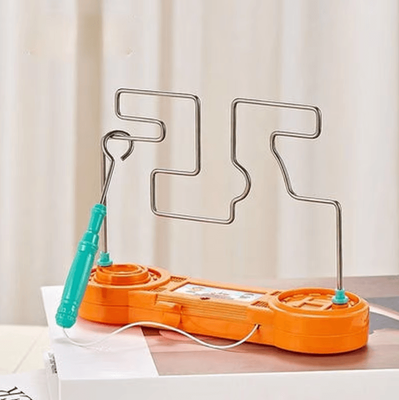
Uplifted Finds Kids Collision Electric Shock Toy Education Electric Touch Maze Game Party Funny Science Experiment Toy greenBring excitement and learning together with this electric touch maze game for kids. Designed to develop hand eye coordination, focus, and problem solving, this fun science toy challenges children to guide the wand through the maze without touching...42,97 $*Shipping: 0,00 $Secure redirect to the provider


-
When does the polymerase stop during PCR?
The polymerase stops during PCR at the end of each cycle when the temperature is lowered for the annealing step. This allows the primers to bind to the template DNA and the polymerase to begin synthesizing new DNA strands. After the annealing step, the polymerase resumes its activity during the extension step, where it adds nucleotides to the growing DNA strands. This cycle of denaturation, annealing, and extension is repeated multiple times to amplify the target DNA sequence. **
-
What is the difference between ligase and polymerase?
Ligase and polymerase are both enzymes involved in DNA replication and repair, but they have different functions. Polymerase is responsible for adding new nucleotides to the growing DNA strand during replication, while ligase is responsible for joining together the Okazaki fragments on the lagging strand of DNA. In other words, polymerase synthesizes new DNA strands, while ligase seals the nicks and gaps in the DNA backbone. Additionally, polymerase requires a primer to start DNA synthesis, while ligase does not. **
-
What is the difference between helicase and RNA polymerase?
Helicase is an enzyme that unwinds the double-stranded DNA helix during DNA replication, while RNA polymerase is an enzyme that synthesizes RNA from a DNA template during transcription. Helicase functions to separate the two DNA strands, allowing other enzymes like DNA polymerase to access the DNA for replication. On the other hand, RNA polymerase reads the DNA template and synthesizes a complementary RNA strand. Overall, helicase is involved in DNA replication, while RNA polymerase is involved in transcription. **
-
What is the Polymerase Chain Reaction (PCR) in brief?
The Polymerase Chain Reaction (PCR) is a laboratory technique used to amplify a specific segment of DNA. It involves a series of temperature-controlled cycles that cause the DNA to be repeatedly copied, resulting in a significant increase in the amount of DNA available for analysis. PCR is widely used in various fields such as genetics, forensics, and medical diagnostics, as it allows for the rapid and efficient replication of DNA sequences. This technique has revolutionized the study and application of DNA, enabling researchers to analyze and manipulate genetic material with high precision and speed. **


Why can't the polymerase chain reaction be used to replicate dinosaur DNA?
The polymerase chain reaction (PCR) cannot be used to replicate dinosaur DNA because the DNA from dinosaurs is too old and degraded. Over millions of years, the DNA breaks down and becomes fragmented, making it impossible to accurately replicate using PCR. Additionally, the PCR process requires specific sequences of DNA to work effectively, and the degraded nature of dinosaur DNA makes it difficult to find intact sequences to amplify. Therefore, other methods, such as paleogenomics, are being explored to study and potentially replicate dinosaur DNA. **
Which experiment is suitable for a Q1 biology research paper on drugs?
A suitable experiment for a Q1 biology research paper on drugs could be investigating the effects of a specific drug on the growth and development of a particular type of cell or organism. For example, the experiment could involve treating cancer cells with a chemotherapy drug and observing the changes in their growth and division rates. This type of experiment would allow for a detailed analysis of the drug's impact on biological processes, providing valuable insights for the research paper. **
Top-Angebote
Products related to Polymerase:
-
Uplift Curations Electric Shock Toy For Kids Educational Touch Maze Game & Science Experiment Gift orangeTurn playtime into a fun learning adventure with this electric shock toy designed to entertain and educate. Whether at a birthday party or in the classroom, this kids science game offers a handson way for children to explore circuits and steadyhand...62,50 $*Shipping: 0,00 $Secure redirect to the provider
-
Uplift Picks Magic Crystal Growing Christmas Tree Science Experiment Toy For Kids white Snowman 15 CmTurn curiosity into wonder with a fun activity that feels like magic. This hands on science toy lets children watch crystals grow and bloom on a paper tree, creating a colorful and exciting transformation. Easy to set up and fascinating to observe,...54,98 $*Shipping: 0,00 $Secure redirect to the provider
-
CGP Books GCSE Combined Science: Biology AQA Revision Question Cards: superb for the 2024 and 2025 exams (CGP AQA GCSE Combined Science)It’s all very well reading through your study notes, but how much can you actually remember? Put your GCSE Biology knowledge to the test with CGP’s brilliant Revision Question Cards! There are 63 cards in the pack, covering all the key Biology topics from the Grade 9-1 AQA (Trilogy Specification) Combined Science course. Each one starts off with quick questions to warm you up, followed by harder questions to get your brain into top gear. Flip the card over and you’ll find full answers to each question, carefully written to help you understand everything you need to know. Along the way, we’ve packed in plenty of diagrams and expert revision tips, and there are even questions on Working Scientifically and Practical Skills. Amazing!6,95 £*Shipping: 2,99 £Secure redirect to the provider
-
CGP Books GCSE AQA Combined Science Revision Question Cards 3 Pack Set (Chemistry, Physics, Biology)To cut to the chase, there’s more to revision than just reading through study notes. If you really want to make sure you know GCSE Chemistry, Physics and Biology you’ll need to test yourself - and that’s where these CGP Revision Question Cards come in! There are 95 cards in the pack, covering every key Grade 9-1 AQA topic. Each one starts off with quick questions to warm you up, followed by harder questions to get your brain into top gear. Flip the card over and you’ll find full answers to each question, carefully written to help you understand everything you need to know. Along the way, we’ve packed in plenty of diagrams and expert revision tips, and there are even questions on Working Scientifically and Practical Skills. Amazing!21,99 £*Shipping: 2,99 £Secure redirect to the provider
-
What is the function of polymerase in biology?
Polymerase is an enzyme that plays a crucial role in DNA replication and transcription. It is responsible for catalyzing the formation of new DNA strands by adding complementary nucleotides to a template DNA strand during replication. In transcription, polymerase helps in the synthesis of RNA molecules by transcribing the genetic information from DNA. Overall, polymerase is essential for the accurate and efficient copying of genetic information in cells. **
-
What is special about Taq polymerase?
Taq polymerase is special because it is derived from the thermophilic bacterium Thermus aquaticus, which thrives in high-temperature environments. This makes Taq polymerase highly heat-stable, allowing it to withstand the high temperatures used in the polymerase chain reaction (PCR) process. Additionally, Taq polymerase has a unique ability to add nucleotides to DNA strands at high temperatures, making it an essential enzyme for amplifying DNA in PCR. Its heat stability and unique enzymatic properties have made Taq polymerase a crucial tool in molecular biology and genetic research. **
-
When does the polymerase stop during PCR?
The polymerase stops during PCR at the end of each cycle when the temperature is lowered for the annealing step. This allows the primers to bind to the template DNA and the polymerase to begin synthesizing new DNA strands. After the annealing step, the polymerase resumes its activity during the extension step, where it adds nucleotides to the growing DNA strands. This cycle of denaturation, annealing, and extension is repeated multiple times to amplify the target DNA sequence. **
-
What is the difference between ligase and polymerase?
Ligase and polymerase are both enzymes involved in DNA replication and repair, but they have different functions. Polymerase is responsible for adding new nucleotides to the growing DNA strand during replication, while ligase is responsible for joining together the Okazaki fragments on the lagging strand of DNA. In other words, polymerase synthesizes new DNA strands, while ligase seals the nicks and gaps in the DNA backbone. Additionally, polymerase requires a primer to start DNA synthesis, while ligase does not. **
Similar search terms for Polymerase
-
Wayland ltd Comic Strip Science Series 4 Books Collection Set (Biology, Chemistry, Physics, Earth and Space)Comic Strip Science Series 4 Books Collection Set By Paul Mason (Biology, Physics, Earth and Space & Chemistry): Biology: Comic Strip Biology makes learning about the science behind animals, plants and the human body fun! Each spread in this series features a short, funny comic strip that explains a process or aspect of science. Around the strip, diagrams and panels give further information on the topic. They are a fantastic way to engage children aged 8 plus with science. Physics: Comic Strip Physics makes learning about the science behind forces, energy and simple machines fun! Each spread in this series features a short, funny comic strip that explains a process or aspect of science. Around the strip, diagrams and panels give further information on the topic. They are a fantastic way to engage children aged 8 plus with science. Earth and Space: Find out about the science behind the solar system, the big bang, gravity, black holes and much more with hilarous cartoon strips, facts and diagrams.Each spread in this series features a short, funny comic strip that explains a process or aspect of science. Around the strip, diagrams and panels give further information on the topic. They are a fantastic way to engage children aged 8 plus with science. Chemistry: Comic Strip Science: Chemistry makes learning about the science behind behind materials fun! It covers topics such as different states of matter, changing states, atoms and much more.Each spread in this series features a short, funny comic strip that explains a process or aspect of science. Around the strip, diagrams and panels give further information on the topic.12,89 £*Shipping: 2,99 £Secure redirect to the provider
-
Uplifted Finds Kids Collision Electric Shock Toy Education Electric Touch Maze Game Party Funny Science Experiment Toy greenBring excitement and learning together with this electric touch maze game for kids. Designed to develop hand eye coordination, focus, and problem solving, this fun science toy challenges children to guide the wand through the maze without touching...42,97 $*Shipping: 0,00 $Secure redirect to the provider
-
Research-powered Eye Duo - Skincare Kit Charlotte Tilbury 3330 Charlotte's Research-powered Eye Duo Size:Darlings, unlock the secret to eyes that appear brighter, depuffed, smoother and younger with my Research-Powered Eye Duo! This CharlotteTilbury.com EXCLUSIVE skincare duo includes:94,05 £*Shipping: 0,00 £Secure redirect to the provider
-
Uplift Curations Electric Shock Toy For Kids Educational Touch Maze Game & Science Experiment Gift greenTurn playtime into a fun learning adventure with this electric shock toy designed to entertain and educate. Whether at a birthday party or in the classroom, this kids science game offers a handson way for children to explore circuits and steadyhand...62,50 $*Shipping: 0,00 $Secure redirect to the provider
-
What is the difference between helicase and RNA polymerase?
Helicase is an enzyme that unwinds the double-stranded DNA helix during DNA replication, while RNA polymerase is an enzyme that synthesizes RNA from a DNA template during transcription. Helicase functions to separate the two DNA strands, allowing other enzymes like DNA polymerase to access the DNA for replication. On the other hand, RNA polymerase reads the DNA template and synthesizes a complementary RNA strand. Overall, helicase is involved in DNA replication, while RNA polymerase is involved in transcription. **
-
What is the Polymerase Chain Reaction (PCR) in brief?
The Polymerase Chain Reaction (PCR) is a laboratory technique used to amplify a specific segment of DNA. It involves a series of temperature-controlled cycles that cause the DNA to be repeatedly copied, resulting in a significant increase in the amount of DNA available for analysis. PCR is widely used in various fields such as genetics, forensics, and medical diagnostics, as it allows for the rapid and efficient replication of DNA sequences. This technique has revolutionized the study and application of DNA, enabling researchers to analyze and manipulate genetic material with high precision and speed. **
-
Why can't the polymerase chain reaction be used to replicate dinosaur DNA?
The polymerase chain reaction (PCR) cannot be used to replicate dinosaur DNA because the DNA from dinosaurs is too old and degraded. Over millions of years, the DNA breaks down and becomes fragmented, making it impossible to accurately replicate using PCR. Additionally, the PCR process requires specific sequences of DNA to work effectively, and the degraded nature of dinosaur DNA makes it difficult to find intact sequences to amplify. Therefore, other methods, such as paleogenomics, are being explored to study and potentially replicate dinosaur DNA. **
-
Which experiment is suitable for a Q1 biology research paper on drugs?
A suitable experiment for a Q1 biology research paper on drugs could be investigating the effects of a specific drug on the growth and development of a particular type of cell or organism. For example, the experiment could involve treating cancer cells with a chemotherapy drug and observing the changes in their growth and division rates. This type of experiment would allow for a detailed analysis of the drug's impact on biological processes, providing valuable insights for the research paper. **
* All prices are inclusive of VAT and, if applicable, plus shipping costs. The offer information is based on the details provided by the respective shop and is updated through automated processes. Real-time updates do not occur, so deviations can occur in individual cases. ** Note: Parts of this content were created by AI.