Buy lopezrubiolab.eu ?
We are moving the project
lopezrubiolab.eu .
Are you interested in purchasing the domain
lopezrubiolab.eu ?
domain@kv-gmbh.de · 0541-91531010
Buy lopezrubiolab.eu ?
What is the solubility temperature?
Solubility temperature is the temperature at which a solute can no longer dissolve in a solvent and starts to precipitate out of the solution. It is the point at which the solution becomes saturated and can no longer hold any more of the solute at that temperature. Solubility temperature varies depending on the specific solute and solvent involved, with some solutes becoming more soluble as temperature increases while others become less soluble. **
What is the solubility product?
The solubility product is a constant value that represents the equilibrium between a solid substance and its ions in a solution. It is the product of the concentrations of the ions in a saturated solution at a specific temperature. The solubility product constant is a measure of how well a compound can dissolve in a solvent, with higher values indicating higher solubility. It is used to predict the solubility of a compound and to determine if a precipitate will form in a solution. **

Similar search terms for Solubility
Top-Angebote
Products related to Solubility:
-
CGP Books GCSE Combined Science: Biology AQA Revision Question Cards: superb for the 2024 and 2025 exams (CGP AQA GCSE Combined Science)It’s all very well reading through your study notes, but how much can you actually remember? Put your GCSE Biology knowledge to the test with CGP’s brilliant Revision Question Cards! There are 63 cards in the pack, covering all the key Biology topics from the Grade 9-1 AQA (Trilogy Specification) Combined Science course. Each one starts off with quick questions to warm you up, followed by harder questions to get your brain into top gear. Flip the card over and you’ll find full answers to each question, carefully written to help you understand everything you need to know. Along the way, we’ve packed in plenty of diagrams and expert revision tips, and there are even questions on Working Scientifically and Practical Skills. Amazing!6,95 £*Shipping: 2,99 £Secure redirect to the provider
-
CGP Books GCSE AQA Combined Science Revision Question Cards 3 Pack Set (Chemistry, Physics, Biology)To cut to the chase, there’s more to revision than just reading through study notes. If you really want to make sure you know GCSE Chemistry, Physics and Biology you’ll need to test yourself - and that’s where these CGP Revision Question Cards come in! There are 95 cards in the pack, covering every key Grade 9-1 AQA topic. Each one starts off with quick questions to warm you up, followed by harder questions to get your brain into top gear. Flip the card over and you’ll find full answers to each question, carefully written to help you understand everything you need to know. Along the way, we’ve packed in plenty of diagrams and expert revision tips, and there are even questions on Working Scientifically and Practical Skills. Amazing!21,99 £*Shipping: 2,99 £Secure redirect to the provider
-
Wayland ltd Comic Strip Science Series 4 Books Collection Set (Biology, Chemistry, Physics, Earth and Space)Comic Strip Science Series 4 Books Collection Set By Paul Mason (Biology, Physics, Earth and Space & Chemistry): Biology: Comic Strip Biology makes learning about the science behind animals, plants and the human body fun! Each spread in this series features a short, funny comic strip that explains a process or aspect of science. Around the strip, diagrams and panels give further information on the topic. They are a fantastic way to engage children aged 8 plus with science. Physics: Comic Strip Physics makes learning about the science behind forces, energy and simple machines fun! Each spread in this series features a short, funny comic strip that explains a process or aspect of science. Around the strip, diagrams and panels give further information on the topic. They are a fantastic way to engage children aged 8 plus with science. Earth and Space: Find out about the science behind the solar system, the big bang, gravity, black holes and much more with hilarous cartoon strips, facts and diagrams.Each spread in this series features a short, funny comic strip that explains a process or aspect of science. Around the strip, diagrams and panels give further information on the topic. They are a fantastic way to engage children aged 8 plus with science. Chemistry: Comic Strip Science: Chemistry makes learning about the science behind behind materials fun! It covers topics such as different states of matter, changing states, atoms and much more.Each spread in this series features a short, funny comic strip that explains a process or aspect of science. Around the strip, diagrams and panels give further information on the topic.12,89 £*Shipping: 2,99 £Secure redirect to the provider
-
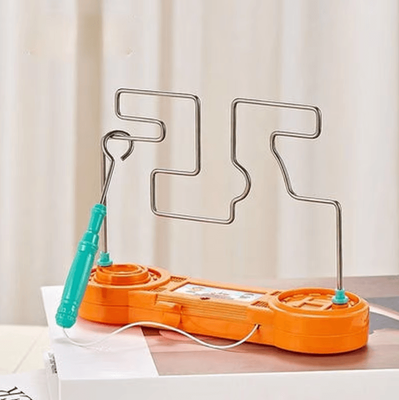
Uplifted Finds Kids Collision Electric Shock Toy Education Electric Touch Maze Game Party Funny Science Experiment Toy orangeBring excitement and learning together with this electric touch maze game for kids. Designed to develop hand eye coordination, focus, and problem solving, this fun science toy challenges children to guide the wand through the maze without touching...42,97 $*Shipping: 0,00 $Secure redirect to the provider


-
How do you test solubility?
To test solubility, you can add a small amount of the substance you want to test to a known volume of a solvent, such as water, and stir to see if it dissolves. If the substance dissolves, it is considered soluble in that solvent. If it does not dissolve, it is considered insoluble. You can also test solubility by gradually adding more of the substance to the solvent and observing if it continues to dissolve or if it reaches a point where no more can dissolve, indicating its saturation point. **
-
What is solubility in chemistry?
Solubility in chemistry refers to the ability of a substance to dissolve in a solvent to form a homogeneous solution. It is a measure of the maximum amount of solute that can dissolve in a given amount of solvent at a specific temperature. Solubility is often expressed in terms of grams of solute per 100 grams of solvent, or in terms of molarity. The factors that affect solubility include temperature, pressure, and the nature of the solute and solvent. **
-
How can one understand solubility?
Solubility refers to the ability of a substance to dissolve in a solvent to form a homogeneous solution. It is influenced by factors such as temperature, pressure, and the nature of the solute and solvent. Understanding solubility involves knowing the maximum amount of solute that can dissolve in a given amount of solvent under specific conditions. This can be determined through experimental measurements and by using solubility curves and tables. Additionally, understanding the molecular interactions between the solute and solvent can provide insight into the factors that affect solubility. **
-
What is the solubility of cellulose?
Cellulose is insoluble in water and most organic solvents due to its strong hydrogen bonding and crystalline structure. However, it can be dissolved in certain ionic liquids or concentrated acids under specific conditions. Overall, cellulose is considered to have very low solubility in common solvents. **


What is the question about solubility?
The question about solubility typically revolves around how well a substance can dissolve in a solvent at a given temperature and pressure. It may involve investigating factors that affect solubility, such as the nature of the solute and solvent, temperature, and pressure. Understanding solubility is important in various fields, including chemistry, pharmacy, and environmental science, as it influences processes like drug formulation, chemical reactions, and pollution control. **
What is the solubility of bromoheptane?
The solubility of bromoheptane is very low in water, as it is a nonpolar molecule and water is a polar solvent. Nonpolar molecules like bromoheptane are not easily dissolved in polar solvents like water due to differences in their molecular structures. However, bromoheptane is soluble in nonpolar solvents such as hexane or ether due to their similar molecular structures. Therefore, bromoheptane is considered to be insoluble in water but soluble in nonpolar solvents. **
Top-Angebote
Products related to Solubility:
-
Uplift Curations Electric Shock Toy For Kids Educational Touch Maze Game & Science Experiment Gift orangeTurn playtime into a fun learning adventure with this electric shock toy designed to entertain and educate. Whether at a birthday party or in the classroom, this kids science game offers a handson way for children to explore circuits and steadyhand...62,50 $*Shipping: 0,00 $Secure redirect to the provider
-
Uplift Picks Magic Crystal Growing Christmas Tree Science Experiment Toy For Kids white Snowman 15 CmTurn curiosity into wonder with a fun activity that feels like magic. This hands on science toy lets children watch crystals grow and bloom on a paper tree, creating a colorful and exciting transformation. Easy to set up and fascinating to observe,...54,98 $*Shipping: 0,00 $Secure redirect to the provider
-
CGP Books GCSE Combined Science: Biology AQA Revision Question Cards: superb for the 2024 and 2025 exams (CGP AQA GCSE Combined Science)It’s all very well reading through your study notes, but how much can you actually remember? Put your GCSE Biology knowledge to the test with CGP’s brilliant Revision Question Cards! There are 63 cards in the pack, covering all the key Biology topics from the Grade 9-1 AQA (Trilogy Specification) Combined Science course. Each one starts off with quick questions to warm you up, followed by harder questions to get your brain into top gear. Flip the card over and you’ll find full answers to each question, carefully written to help you understand everything you need to know. Along the way, we’ve packed in plenty of diagrams and expert revision tips, and there are even questions on Working Scientifically and Practical Skills. Amazing!6,95 £*Shipping: 2,99 £Secure redirect to the provider
-
CGP Books GCSE AQA Combined Science Revision Question Cards 3 Pack Set (Chemistry, Physics, Biology)To cut to the chase, there’s more to revision than just reading through study notes. If you really want to make sure you know GCSE Chemistry, Physics and Biology you’ll need to test yourself - and that’s where these CGP Revision Question Cards come in! There are 95 cards in the pack, covering every key Grade 9-1 AQA topic. Each one starts off with quick questions to warm you up, followed by harder questions to get your brain into top gear. Flip the card over and you’ll find full answers to each question, carefully written to help you understand everything you need to know. Along the way, we’ve packed in plenty of diagrams and expert revision tips, and there are even questions on Working Scientifically and Practical Skills. Amazing!21,99 £*Shipping: 2,99 £Secure redirect to the provider
-
What is the solubility temperature?
Solubility temperature is the temperature at which a solute can no longer dissolve in a solvent and starts to precipitate out of the solution. It is the point at which the solution becomes saturated and can no longer hold any more of the solute at that temperature. Solubility temperature varies depending on the specific solute and solvent involved, with some solutes becoming more soluble as temperature increases while others become less soluble. **
-
What is the solubility product?
The solubility product is a constant value that represents the equilibrium between a solid substance and its ions in a solution. It is the product of the concentrations of the ions in a saturated solution at a specific temperature. The solubility product constant is a measure of how well a compound can dissolve in a solvent, with higher values indicating higher solubility. It is used to predict the solubility of a compound and to determine if a precipitate will form in a solution. **
-
How do you test solubility?
To test solubility, you can add a small amount of the substance you want to test to a known volume of a solvent, such as water, and stir to see if it dissolves. If the substance dissolves, it is considered soluble in that solvent. If it does not dissolve, it is considered insoluble. You can also test solubility by gradually adding more of the substance to the solvent and observing if it continues to dissolve or if it reaches a point where no more can dissolve, indicating its saturation point. **
-
What is solubility in chemistry?
Solubility in chemistry refers to the ability of a substance to dissolve in a solvent to form a homogeneous solution. It is a measure of the maximum amount of solute that can dissolve in a given amount of solvent at a specific temperature. Solubility is often expressed in terms of grams of solute per 100 grams of solvent, or in terms of molarity. The factors that affect solubility include temperature, pressure, and the nature of the solute and solvent. **
Similar search terms for Solubility
-
Wayland ltd Comic Strip Science Series 4 Books Collection Set (Biology, Chemistry, Physics, Earth and Space)Comic Strip Science Series 4 Books Collection Set By Paul Mason (Biology, Physics, Earth and Space & Chemistry): Biology: Comic Strip Biology makes learning about the science behind animals, plants and the human body fun! Each spread in this series features a short, funny comic strip that explains a process or aspect of science. Around the strip, diagrams and panels give further information on the topic. They are a fantastic way to engage children aged 8 plus with science. Physics: Comic Strip Physics makes learning about the science behind forces, energy and simple machines fun! Each spread in this series features a short, funny comic strip that explains a process or aspect of science. Around the strip, diagrams and panels give further information on the topic. They are a fantastic way to engage children aged 8 plus with science. Earth and Space: Find out about the science behind the solar system, the big bang, gravity, black holes and much more with hilarous cartoon strips, facts and diagrams.Each spread in this series features a short, funny comic strip that explains a process or aspect of science. Around the strip, diagrams and panels give further information on the topic. They are a fantastic way to engage children aged 8 plus with science. Chemistry: Comic Strip Science: Chemistry makes learning about the science behind behind materials fun! It covers topics such as different states of matter, changing states, atoms and much more.Each spread in this series features a short, funny comic strip that explains a process or aspect of science. Around the strip, diagrams and panels give further information on the topic.12,89 £*Shipping: 2,99 £Secure redirect to the provider
-
Uplifted Finds Kids Collision Electric Shock Toy Education Electric Touch Maze Game Party Funny Science Experiment Toy orangeBring excitement and learning together with this electric touch maze game for kids. Designed to develop hand eye coordination, focus, and problem solving, this fun science toy challenges children to guide the wand through the maze without touching...42,97 $*Shipping: 0,00 $Secure redirect to the provider
-
Research-powered Eye Duo - Skincare Kit Charlotte Tilbury 3322 Charlotte's Research-powered Eye Duo Size:Darlings, unlock the secret to eyes that appear brighter, depuffed, smoother and younger with my Research-Powered Eye Duo! This CharlotteTilbury.com EXCLUSIVE skincare duo includes:94,05 £*Shipping: 0,00 £Secure redirect to the provider
-
Uplift Curations Electric Shock Toy For Kids Educational Touch Maze Game & Science Experiment Gift greenTurn playtime into a fun learning adventure with this electric shock toy designed to entertain and educate. Whether at a birthday party or in the classroom, this kids science game offers a handson way for children to explore circuits and steadyhand...62,50 $*Shipping: 0,00 $Secure redirect to the provider
-
How can one understand solubility?
Solubility refers to the ability of a substance to dissolve in a solvent to form a homogeneous solution. It is influenced by factors such as temperature, pressure, and the nature of the solute and solvent. Understanding solubility involves knowing the maximum amount of solute that can dissolve in a given amount of solvent under specific conditions. This can be determined through experimental measurements and by using solubility curves and tables. Additionally, understanding the molecular interactions between the solute and solvent can provide insight into the factors that affect solubility. **
-
What is the solubility of cellulose?
Cellulose is insoluble in water and most organic solvents due to its strong hydrogen bonding and crystalline structure. However, it can be dissolved in certain ionic liquids or concentrated acids under specific conditions. Overall, cellulose is considered to have very low solubility in common solvents. **
-
What is the question about solubility?
The question about solubility typically revolves around how well a substance can dissolve in a solvent at a given temperature and pressure. It may involve investigating factors that affect solubility, such as the nature of the solute and solvent, temperature, and pressure. Understanding solubility is important in various fields, including chemistry, pharmacy, and environmental science, as it influences processes like drug formulation, chemical reactions, and pollution control. **
-
What is the solubility of bromoheptane?
The solubility of bromoheptane is very low in water, as it is a nonpolar molecule and water is a polar solvent. Nonpolar molecules like bromoheptane are not easily dissolved in polar solvents like water due to differences in their molecular structures. However, bromoheptane is soluble in nonpolar solvents such as hexane or ether due to their similar molecular structures. Therefore, bromoheptane is considered to be insoluble in water but soluble in nonpolar solvents. **
* All prices are inclusive of VAT and, if applicable, plus shipping costs. The offer information is based on the details provided by the respective shop and is updated through automated processes. Real-time updates do not occur, so deviations can occur in individual cases. ** Note: Parts of this content were created by AI.